The IWMI dividend history 2026 has quickly become a hot topic among income investors in the USA and UK. Right from the beginning, IWMI stands out because it does not behave like a traditional dividend stock. Instead, it follows a structured income strategy that changes with market conditions. This is why many investors closely track IWMI ETF dividend yield history before making decisions.
Unlike fixed dividend companies, IWMI uses dynamic mechanisms that influence its payouts. That means IWMI high yield ETF dividends can rise or fall depending on volatility and strategy performance. As a result, investors often study IWMI dividend performance over time to understand whether it fits their income goals or long-term strategy.
What is IWMI? (Overview of IWMI ETF/Income Fund)
The IWMI ETF is an income-focused investment designed for investors who want regular cash flow without relying only on traditional dividend-paying companies. It is often categorized among modern income funds that use structured strategies such as options or derivative exposure. This is why IWMI covered call ETF dividends are often mentioned when discussing its income generation model.
At its core, IWMI aims to turn market movement into income. When volatility increases, the fund can generate higher premiums, which directly impacts IWMI income distribution history. This makes it attractive for investors who understand market cycles. However, it also means income is not fixed or guaranteed, which is a key difference from traditional dividend ETFs.
Many USA and UK investors ask what is the dividend history of the IWMI ETF before investing. The answer lies in its adaptive structure, where income is generated based on strategy performance rather than company earnings. This is why IWMI fund distributions history often reflects market behavior instead of steady growth.
IWMI Dividend History Overview
The IWMI payout history shows a pattern that changes with market conditions. Instead of steady growth, the ETF adjusts its income based on volatility, interest rates, and strategy performance. This creates a dynamic system where payouts rise during uncertain markets and stabilize during calm periods.
When analyzing IWMI dividend trend analysis, investors notice that income is not linear. Instead, it follows market cycles. For example, during volatile years, IWMI ETF yield over time tends to increase. In calmer years, yields may flatten or slightly decrease. This makes it important to understand IWMI dividend consistency before relying on it for fixed income.
A simple breakdown of behavior looks like this:
| Market Condition | Dividend Behavior |
| High Volatility | Higher payouts |
| Stable Market | Moderate payouts |
| Low Volatility | Reduced payouts |
This pattern explains why IWMI income ETF dividend performance analysis is essential for long-term planning.
IWMI Dividend Payment Schedule
The IWMI dividend schedule is typically structured around monthly or periodic distributions. However, exact timing may vary based on fund operations. Investors often track IWMI dividend payment dates to plan cash flow or reinvestment strategies.
Understanding timing is crucial because missing the IWMI ex dividend date means missing the payout. This is why experienced investors carefully monitor distribution calendars. The fund does not always follow rigid corporate schedules, which makes tracking even more important.
A basic flow of payments looks like this:
| Stage | Description |
| Ex-Date | Determines eligibility |
| Record Date | Confirms ownership |
| Payment Date | Dividend is issued |
This structure helps investors understand how often does IWMI pay dividends and how to track them effectively.
IWMI Dividend Yield Over Time
The IWMI ETF dividend yield history reflects a changing income environment. Instead of stable yields, IWMI adjusts based on market activity. This is why many investors compare IWMI historical dividend yield comparison before investing.
One of the main reasons behind yield fluctuations is strategy design. When markets move sharply, option premiums increase, which boosts income. That is why people often ask why IWMI pays high dividends during certain periods.
A simplified yield pattern looks like this:
| Market Phase | Yield Behavior |
| High volatility | High yield |
| Medium volatility | Balanced yield |
| Low volatility | Lower yield |
This explains IWMI dividend yield over the last few years, which has shown cycles instead of consistent growth.
IWMI Dividend Growth History
The IWMI dividend growth history does not follow traditional upward patterns. Instead, it fluctuates based on strategy performance and market conditions. Many investors ask if IWMI increases dividends every year, and the answer is no.
Unlike dividend aristocrats, IWMI focuses on adaptive income. This means IWMI dividend per share history may rise in strong market years and stabilize in weaker ones. It is not designed for fixed annual growth but for flexible income generation.
This structure leads to a more realistic but unpredictable income pattern, which is important for long-term planning.
IWMI Dividend Reinvestment Plan (DRIP)
The DRIP system allows investors to reinvest dividends automatically. This is one of the most powerful ways to build wealth over time. Many investors consider IWMI dividend reinvestment plan benefits essential for long-term growth.
By reinvesting payouts, investors increase their share count. Over time, this leads to compounding growth. This strategy works especially well when combined with fluctuating income cycles.
For example:
| Year | Shares Held | Income Growth |
| Start | 100 | Base income |
| Year 2 | 115 | Higher payout cycle |
| Year 3 | 135 | Compounding effect |
This shows why IWMI ETF income distribution trends can improve significantly with reinvestment.

Factors That Affect IWMI Dividend Payments
Several factors influence payouts. The most important is market volatility. When volatility rises, income increases due to higher premium collection. This directly affects IWMI dividend distributions.
Other factors include interest rates, fund strategy adjustments, and economic conditions in USA and UK markets. This is why investors ask what affects IWMI dividend distributions.
Understanding these drivers helps explain IWMI dividend consistency and reliability, which is not fixed but adaptive.
IWMI Dividend History Table (Year-by-Year Overview)
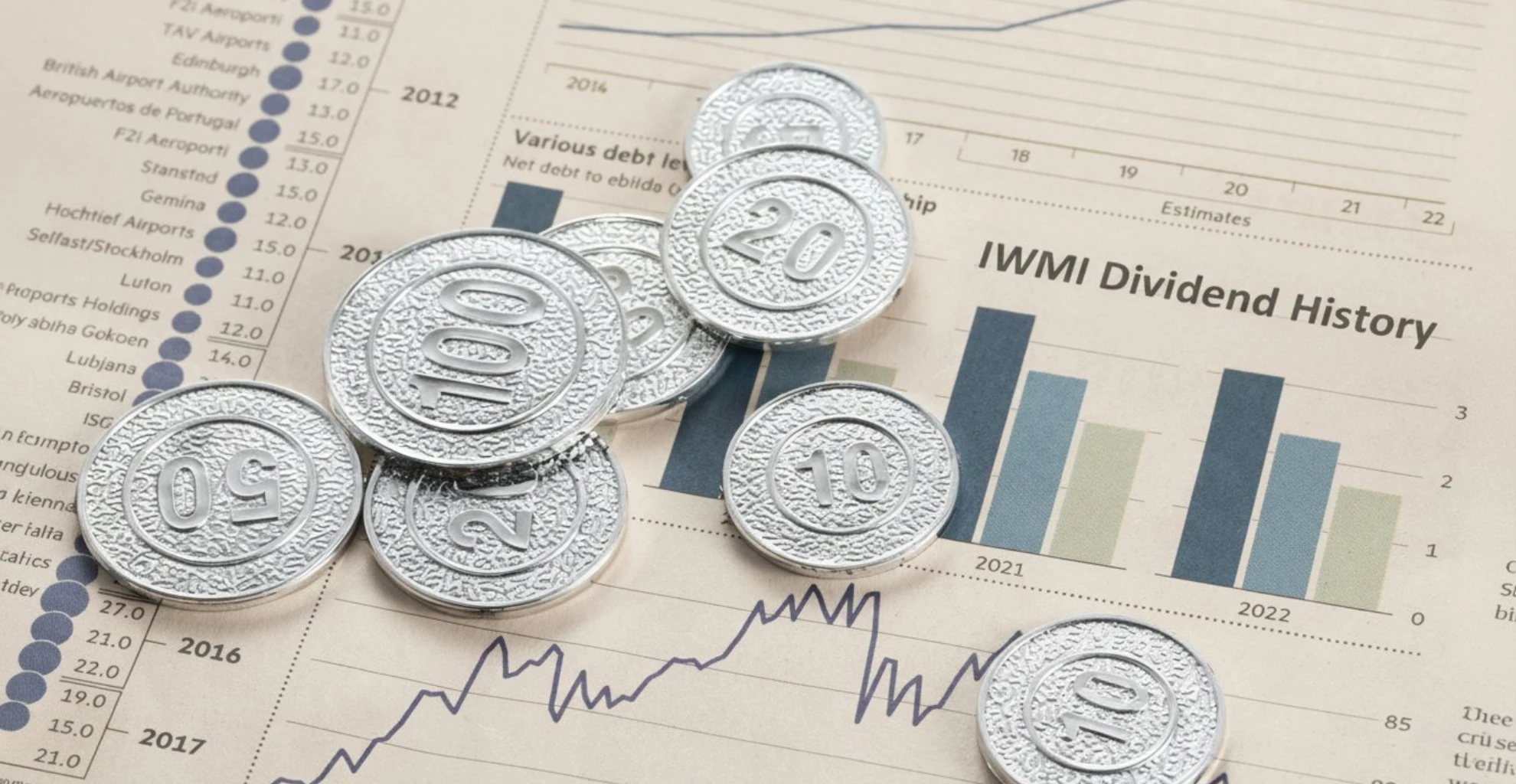
A clear table helps visualize income behavior. The IWMI dividend payout history chart shows how returns change over time.
| Year | Yield Pattern | Notes |
| 2021 | Moderate | Early-stage performance |
| 2022 | High | Strong volatility impact |
| 2023 | Variable | Market adjustment |
| 2024 | Balanced | Stabilized income cycle |
This table reflects IWMI income distribution history and helps investors understand long-term behavior.
IWMI vs Other High-Yield ETFs
When comparing IWMI with other ETFs, differences become clear. Traditional ETFs rely on dividends from companies, while IWMI uses structured income strategies. This makes IWMI vs other high yield ETFs dividends an important comparison.
IWMI often shows higher income potential during volatile markets but lower stability compared to traditional funds. That is why IWMI high yield ETF dividends are considered more dynamic.
Risks of Investing in IWMI for Dividends
Like all income investments, IWMI carries risk. The biggest concern is income variability. Since payouts depend on market conditions, they are not guaranteed. This leads investors to question if the IWMI dividend is safe for long-term investors.
Another risk is dependency on strategy performance. If market conditions change, income may decline. This affects IWMI dividend consistency and reliability over time.
Is IWMI a Good Dividend ETF for Income Investors?
IWMI can be a strong choice for investors who understand market-driven income. However, it may not suit those who prefer stable monthly payouts. Many investors ask if IWMI is a good dividend ETF for monthly income, and the answer depends on risk tolerance.
For passive income seekers, IWMI can work well when paired with reinvestment strategies. This is why IWMI, good for passive income investors, is often linked to long-term planning.
Final Thoughts
The IWMI dividend history 2026 shows a modern ETF built for adaptive income. It does not guarantee fixed payouts but instead responds to market conditions. This makes it a flexible but unpredictable income tool.
Understanding IWMI dividend consistency and reliability is essential before investing. It is not a traditional dividend stock but a strategy-based income fund. For informed investors, it can be a powerful addition to a diversified portfolio when used wisely.
Frequently Asked Questions
1. What is IWMI dividend history?
IWMI dividend history shows how the ETF has paid income over time based on market conditions and strategy performance.
2. How often does IWMI pay dividends?
IWMI usually pays dividends monthly, but timing can vary depending on market conditions and fund strategy.
3. Is IWMI a good dividend ETF for monthly income?
IWMI can work for monthly income, but payouts are variable and depend on market volatility.
4. Why does IWMI pay high dividends sometimes?
IWMI pays higher dividends during volatile markets because option premiums increase income generation.
5. Is IWMI safe for long-term dividend investors?
IWMI can be used long term, but income is not fixed and may fluctuate with market changes.